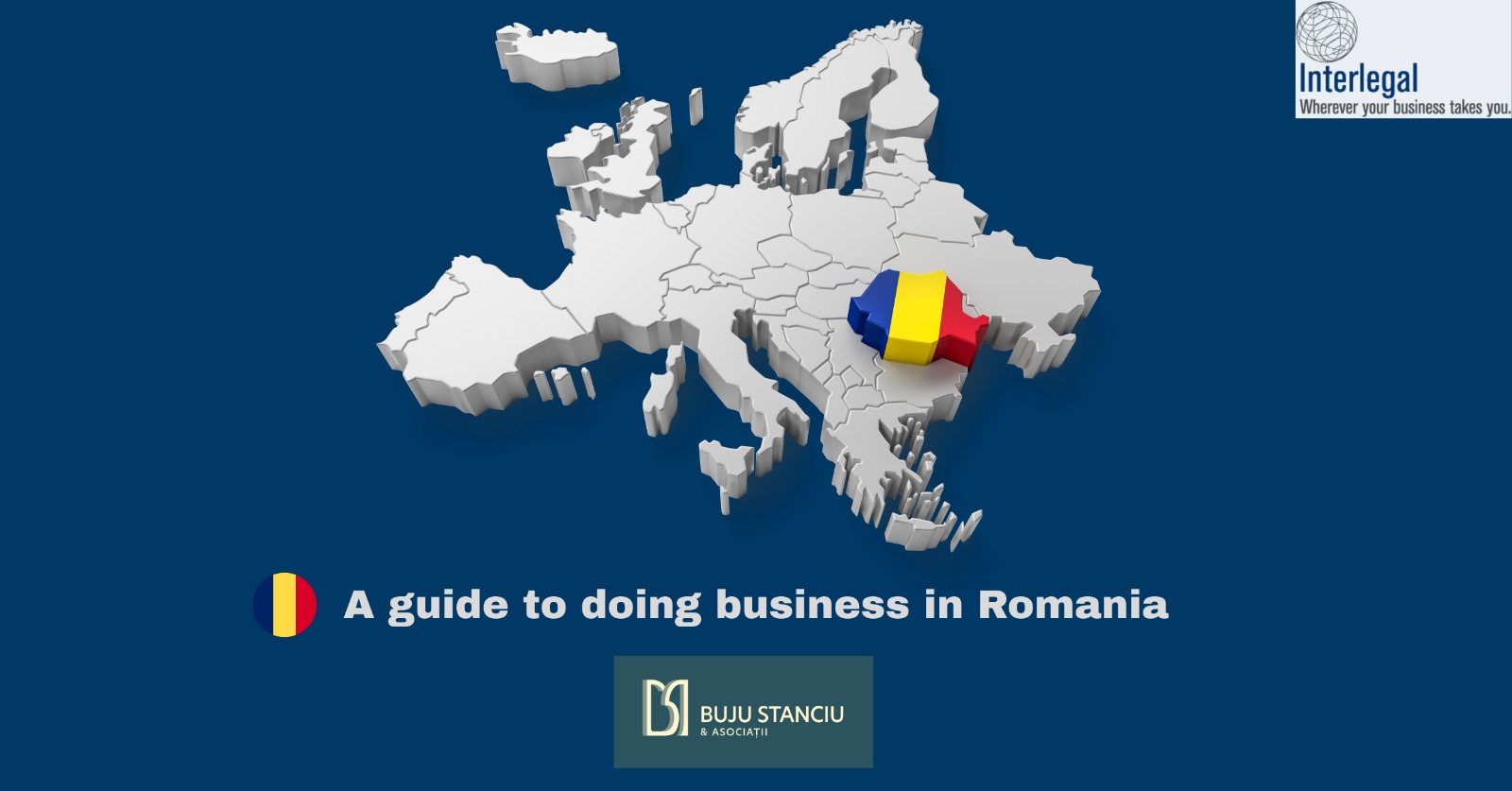
Romania offers EU single-market access, a large skilled workforce, and competitive operating costs, positioning it as one of Central and Eastern Europe’s most attractive destinations for foreign capital. The regulatory landscape has evolved significantly in 2024–2026, with the government implementing a fiscal consolidation programme that includes VAT adjustments to 21%, a revised dividend tax, and a restructured micro-enterprise regime. Foreign investors entering Romania will benefit from engaging with a maturing civil-law system that continues to align with EU standards, while factoring in the updated fiscal framework when structuring their investment.
Business environment and macroeconomic context
Romania is the sixth-largest economy in the EU by population (~18.9 million) and seventh by GDP. The country joined the EU on 1 January 2007 and became a full Schengen member on 1 January 2025 (land borders; air and sea borders opened 31 March 2024). It is pursuing OECD accession, with the government targeting 2026 although completion remains unconfirmed.
GDP and growth. Nominal GDP reached approximately EUR 420 billion in 2025 (IMF estimates). The 2026 forecast ranges from 1.0% to 1.1% with the BNR expecting stagnation in Q1 2026.
Romania’s inflation reached 9.6% in January 2026 and 9.3% in February 2026, reflecting the one-off impact of VAT adjustments and the long-overdue deregulation of energy prices, a structural reform consistently recommended by the IMF and European Commission. The BNR projects a gradual disinflation path through 2026 as these base effects normalise..
Fiscal position. The budget deficit of 9.3% of GDP in 2024 prompted decisive fiscal action: the current government, led by PM Ilie Bolojan, has implemented a comprehensive consolidation programme that international credit agencies and EU institutions are closely monitoring. Romania retains investment-grade status across all three major agencies (BBB-/Baa3), and the consolidation trajectory is expected to narrow the deficit meaningfully over the 2025–2027 horizon.
Euro adoption remains a medium-to-long-term objective. Romania has not yet joined ERM II, and no official target date has been set. The government has publicly committed to eventual convergence, and the alignment of Romanian law with the EU acquis continues regardless of euro-area membership.
Key sectors drawing foreign investment include manufacturing (especially automotive and industrial equipment), services (notably IT and business services), energy (including renewables), healthcare, real estate and agriculture.
Investment data table
| Official Name | Romania (România) |
| Capital City | Bucharest (București) |
| Prominent Business Centres | Cluj-Napoca, Timișoara, Iași, Brașov, Constanța, Sibiu, Oradea, Craiova |
| Total Annual M&A Deal Value (2025) | ~USD 6.7 billion (275 transactions), broadly flat year-on-year |
| Top Sectors by Deal Activity (2025) | Real estate/construction, energy & utilities (41 deals), advanced manufacturing (41 deals), health & life sciences (39 deals, +30% y/y), TMT (39 deals) |
| Foreign Direct Investment (FDI) Inflows (2025) | ~EUR 7.59 billion net |
| Top Source Countries for FDI | Germany, Austria, France, Netherlands, Cyprus |
| Outbound Country Investments | Predominantly inbound; outbound investment activity remains limited |
| Cross-Border vs Domestic Deals | Inbound ~53%, domestic ~42%, outbound ~5% |
Legal system and regulatory framework
Romania operates a civil law system. The New Civil Code (Law No. 287/2009, in force 1 October 2011), which replaced the 1864 Civil Code (itself modelled on the French Napoleonic Code), the 1887 Commercial Code, and the 1954 Family Code, drew its primary inspiration from the Quebec Civil Code (1994). While the New Civil Code eliminated the formal civil/commercial person distinction and brought general contractual and obligations law under a single instrument, significant areas of commercial activity continue to be governed by separate legislation, most notably Law No. 31/1990 on companies, Law No. 85/2014 on insolvency, and sector-specific regulatory frameworks.
The New Civil Procedure Code (Law No. 134/2010, in force 15 February 2013) modernised procedural rules. Statutory laws (the Constitution, codes, and statutes) are the primary source of law and case precedent is not formally binding, unlike in common law jurisdictions. Judges do not create law, and previously decided cases serve only as persuasive guidance, not as binding precedent. In practice, the High Court of Cassation and Justice may issue guiding decisions to ensure lower court consistency, but these address interpretation of statutes rather than create new rules.
As an EU member, Romania’s regulatory framework is heavily influenced by EU law. EU regulations have direct effect, and EU directives are implemented via national laws. In case of conflict, EU law supremacy is recognized, and Romanian courts (and the Constitutional Court) are bound to ensure compliance with EU treaties and the rulings of the European Court of Justice (ECJ). Key regulatory bodies coordinate with EU counterparts (e.g. the Romanian Competition Council with the European Commission for antitrust matters).
Romania’s hierarchy of norms is anchored in the 1991 Constitution (revised 2003), enforced by the Constitutional Court (CCR), whose decisions are binding erga omnes. EU law occupies a distinct supranational position: Article 148 of the Constitution provides that EU Treaty provisions and binding EU acts take precedence over conflicting domestic law, with EU Regulations applying directly and EU Directives requiring transposition. Ratified international treaties rank above ordinary laws but below the Constitution, with international human rights instruments (notably the ECHR) prevailing in cases of conflict.
Within the domestic order, organic laws govern constitutionally reserved matters (judiciary, electoral system, fundamental rights) and require an absolute parliamentary majority while ordinary laws cover the general legislative domain. Below these sit Government emergency ordinances (OUG), a constitutionally authorised instrument for urgent situations that carries the force of law upon publication but must be submitted to Parliament for ratification. Government decisions (HG) implement primary legislation without being able to derogate from it, followed by ministerial orders and, at the bottom of the hierarchy, local government acts.
Separation of powers is enshrined in the 1991 Constitution (revised 2003). The Parliament (Senate and Chamber of Deputies) enacts laws, including the Civil Code, Companies Law, Fiscal Code, etc., which are published in the Official Gazette. The Executive (Government led by a Prime Minister, and the President with limited powers) issues regulations and emergency ordinances, within constitutional limits. The Judiciary is organized into a hierarchal court system: District Courts for local disputes, County-level Tribunals, Courts of Appeal, and the Supreme Court, the High Court of Cassation and Justice (Înalta Curte de Casație și Justiție). Notably, the High Court does not conduct constitutional review of laws which lies with the separate Constitutional Court, which can strike down laws that violate the Constitution. Judges are career civil servants, independent per the Constitution, and there are no jury trials in civil or commercial cases.
Commercial disputes are generally heard by the civil courts (Tribunals at first instance for larger claims). Specialized commercial sections within courts handle company law, insolvency, and other business cases. Proceedings are conducted in Romanian language. While the civil procedure has been modernized, court litigation can be lengthy due to backlogs with a typical commercial lawsuit possibly taking 1–2 years at trial plus additional time on appeal. However, The New Civil Procedure Code (Law No. 134/2010) introduced significant modernisation, including stricter case management rules, electronic filing capabilities, and expanded use of interim remedies, including injunctions, to protect rights pending trial. Court judgments from EU member states are recognized and enforced under the Brussels I Regulation without review of the merits. Judgments from non-EU countries can be recognized on the basis of reciprocity and Romanian private international law provisions.
Key institutions and regulatory bodies
Commercial activity is overseen by several authorities, including:
- The National Trade Register Office (ONRC) registers all companies, maintains the central company register, records beneficial ownership data and connects to the EU Business Registers Interconnection System (BRIS). Online services are available at portal.onrc.ro.
- The Competition Council enforces antitrust and merger control laws in line with EU competition regulations.
- The National Bank of Romania (NBR) regulates banking and currency stability and oversees foreign exchange and licensing of financial institutions.
- The Financial Supervisory Authority (ASF) regulates capital markets, markets in crypto-assets, insurance and private pensions.
- The National Fiscal Administration Agency (ANAF) is the central tax authority responsible for tax collection, fiscal inspections, transfer pricing audits, and enforcement, operating under increasingly data-driven compliance tools including SAF-T and e-Factura cross-referencing.
- The National Authority for Consumer Protection (ANPC) enforces consumer protection legislation, including distance selling rules, unfair commercial practices, and product safety, and is the primary supervisory authority for e-commerce operators, with powers to impose fines and suspend non-compliant websites.
- Sectoral regulators exist for energy (ANRE), telecom & artificial intelligence (ANCOM), gambling (ONJN), data protection (ANSPDCP), cybersecurity (DNSC), providing licenses and ensuring compliance with sector-specific laws.
In line with EU digitalization mandates, Law No. 265/2022 modernized the Trade Registry and company law procedures. Since late 2022, Romania has enabled online filing and registration of new companies and branches using electronic signatures. The ONRC can now verify certain information via inter-agency data (once-only principle) and issue digital registration certificates. These changes simplify business start-up and reduce bureaucracy. Other recent legal reforms include improvements in judicial transparency and anti-corruption measures (e.g. establishment of specialized prosecution units for high-level corruption), reflecting Romania’s efforts under EU Rule of Law monitoring.
Overall, Romania’s legal system is predictable and rule-based, with comprehensive codified laws governing business. Foreign investors benefit from EU-law harmonization and investment protections (see Section 3 below), but should be mindful of civil-law formalism (e.g. importance of notarizations, strict contract interpretation) and the need for local counsel to navigate Romanian-language proceedings and documents.
Foreign investment and market entry
Romania generally welcomes foreign investment, imposing no general requirement for local partners or joint ventures in ordinary industries. Foreign investors (whether companies or individuals) may fully own Romanian companies (up to 100% foreign shareholding) and enjoy rights equivalent to domestic investors.
There are no broad sectoral ownership restrictions; even strategic sectors like telecom, banking, or energy are open to 100% foreign ownership, subject to licensing.
Key exceptions include:
- defence, subject to CEISD/CSAT security review (please see below);
- energy, subject to FDI screening and sector-specific regulations via ANRE;
- banking, with non-EU entities requiring NBR authorisation, while EU-passported banks need only notify NBR;
- agricultural land, with foreign individuals from outside the EU not being able to directly own agricultural or forest land in Romania (EU citizens gained equal land rights from 2014). However, non-EU investors commonly overcome this by establishing a Romanian company, since companies (even if foreign-owned) can own land without restriction. Urban real estate (buildings and plots) can be owned by foreigners, with certain reciprocity conditions for non-EU nationals.
Investment incentives
Romania has historically offered state aid for large investments under GD 807/2014 and GD 332/2014, covering CAPEX and job-creation incentives respectively, with aid intensity up to 50% in most regions. Both schemes closed to new applications on 31 December 2023, with payments under existing awards continuing through 2028. Successor schemes for the 2021–2027 programming period had not been formally launched as of March 2026. Foreign investors are advised to monitor InvestRomania (investromania.gov.ro) and the Ministry of Finance for new state aid frameworks, which are expected to be introduced during 2026.
Romania offers meaningful R&D incentives: taxpayers may choose between a 50% additional deduction on eligible R&D expenses or, alternatively, a new 10% refundable R&D tax credit (introduced by OUG 8/2026 from 1 January 2026), alongside accelerated depreciation for R&D equipment in either case. The reinvested profit exemption continues to apply to profits invested in qualifying technological equipment, computers, and software.
EU Funds and single-market access
As an EU Member State since 2007, Romania offers foreign investors seamless access to the EU single market (i.e., free movement of goods, services, capital, and persons) as well as access to EU public procurement and the broader framework of EU regulatory harmonisation. Romanian law is substantially aligned with the EU acquis across commercial, financial, consumer protection, data protection, environmental, and employment law domains.
Romania is also a beneficiary of significant EU Structural and Cohesion Funds, the Recovery and Resilience Facility (RRF), and Common Agricultural Policy (CAP) allocations under the 2021–2027 programming period. These funds support infrastructure, energy transition, digitalisation, research and innovation, and agricultural development, creating investment and co-financing opportunities for private operators, particularly in sectors aligned with national recovery and resilience priorities. Investors are advised to monitor the Ministry of Investments and European Projects (MIPE) and the InvestRomania agency for current funding opportunities and co-investment programmes.
Golden shares and free trade zones
Romania does not employ formal golden share or special veto right mechanisms. The state instead exercises control over key state-owned enterprises (SOEs), predominantly in energy, transport, and utilities, through direct majority shareholding. SOE corporate governance is regulated by GEO No. 109/2011 as significantly amended by Law No. 111/2016 and most recently by Law No. 187/2023, which established AMEPIP (the Agency for Monitoring and Assessing the Performance of State-Owned Enterprises).
Romania operates free trade zones under Law No. 84/1992, supporting manufacturing, warehousing, and logistics activities, with goods placed within these zones free of import duties and VAT under customs supervision.
Market entry options
Foreign investors can enter the Romanian market in several ways:
- Greenfield investment: establishing a new Romanian subsidiary or branch office (see Section 4 on structures).
- Mergers & Acquisitions: acquiring or partnering with an existing Romanian company. M&A transactions by foreign firms are common and generally unrestricted, aside from the competition (antitrust) clearance for larger combinations and the FDI review discussed below. Romania’s merger control aligns with EU rules and large M&As may need approval from the Romanian Competition Council or the European Commission if EU turnover thresholds are met.
- Public procurement and PPPs: Foreign companies can bid for government contracts or engage in public-private partnerships under non-discrimination principles (EU procurement directives apply). However, local presence or a local partner can be advantageous in navigating administrative procedures.
- Franchising, distribution, or licensing: Romania’s legal system allows standard commercial agreements and foreign franchisors or licensors face no special limitations beyond contract law and EU competition rules.
Foreign investment screening
Romania’s foreign direct investment screening mechanism underwent major reform with the adoption of GEO 17/2026 (Emergency Ordinance No. 17/2026), published in the Official Gazette on 12 March 2026 and in force from 13 March 2026. The mechanism builds on the framework originally introduced by OUG 46/2022 (transposing EU Regulation 2019/452).
The screening body is the CEISD (Comisia pentru Examinarea Investițiilor Străine Directe), a collegiate inter-institutional body without legal personality, subordinated to the Government. The Competition Council provides the CEISD’s secretariat functions through its Foreign Investments Directorate and issues formal clearance decisions based on CEISD opinions.
For conditional approvals or prohibitions, the Romanian Government issues the final decision, with CSAT (Supreme Council of National Defence) involvement in national security cases.
Key changes under GEO 17/2026:
- Threshold raised from EUR 2 million to EUR 5 million (although investments below this may still be examined if they could affect national security or public order)
- Asset deals brought into scope: Acquisition of tangible and/or intangible assets in sensitive sectors now triggers notification, not merely control-acquiring transactions
- Explicit sensitive sector list for asset deals: AI, robotics, semiconductors, cybersecurity, aerospace, defence technologies, energy storage, quantum and nuclear technologies, nanotechnologies, biotechnologies; critical infrastructure (energy, transport, water, health, communications, data processing, defence, electoral, financial); pharmaceuticals; defence industry; and the agri-food sector (including agricultural lands, irrigation infrastructure, grain terminals, silos, gene banks, and fertiliser production technologies)
- Anti-fragmentation rules: Two or more transactions within one year between the same parties regarding the same company with similar purpose are treated as a single investment
- Intra-group exemption: Intra-group restructurings and transactions between EU/OECD entities are exempt if there is no change in effective control or beneficial owner, and financing comes exclusively from intra-group or EU/OECD sources. An EU entity controlled by a non-EU/OECD entity may still fall within scope.
- Screening fee reduced from EUR 10,000 to EUR 5,000 (refundable if screening conditions are not met)
- Timelines have been significantly compressed: the CEISD clearance opinion must be issued within 45 calendar days of a complete notification (down from 60), third-party authority opinions within 20 days (down from 45), and the formal authorisation order within 10 days thereafter. Detailed investigations may extend the process to 90 days, with a possible 45-day extension, while CSAT retains a separate 90-day window for national security cases.
As of early 2026, there have been no formal prohibition decisions, though investments raising concerns have been informally discouraged.
In practice, very few investments have been blocked; the mechanism is aimed at high-risk cases (e.g. critical energy assets or defense-related companies being acquired by non-EU state-owned entities). Most foreign investors will not require FDI approval unless operating in clearly sensitive areas and meeting the value threshold.
Business structures available to foreign investors
SRL (societate cu răspundere limitată), equivalent to private limited company or limited liability company
The SRL is Romania’s most popular company form for foreign-owned business due to its flexibility and minimal capital requirements. Law 239/2025 (in force 18 December 2025, with most provisions effective 1 January 2026) reinstated minimum capital requirements: newly incorporated SRLs must have a minimum share capital of RON 500 (~EUR 100). Existing SRLs whose net turnover exceeded RON 400,000 in the previous financial year must increase their share capital to at least RON 5,000 (~EUR 1,000) by 18 December 2027. Non-compliance exposes the company to dissolution proceedings initiated by any interested party or by ONRC.
An SRL may have between one and fifty shareholders, natural persons or legal entities, Romanian or foreign, with no residency restrictions applicable to either shareholders or administrators. Shareholder liability is limited to their subscribed capital contribution, and governance is flexible, requiring only one or more administrators without any mandatory board structure.
SA (societate pe acțiuni), equivalent to a joint stock company or corporation
This form is used for larger enterprises, especially if listing on the stock exchange or if many shareholders are involved.
The SA requires a minimum share capital of RON 90,000 (~EUR 18,000), of which at least 30% must be paid upon registration. A minimum of 2 shareholders is required (no maximum). Shares are freely transferable and may be traded on organised markets. The SA offers two governance systems: a unitary (one-tier) system with a Board of Directors (most common), or a dual (two-tier) system with a Directorate and Supervisory Board. Companies subject to mandatory audit must have at least 3 board members and must delegate day-to-day management.
Partnerships and other structures
- SNC (general partnership) requires minimum 2 partners with unlimited joint and several liability; SCS (limited partnership) requires at least 1 general partner (unlimited liability) and 1 limited partner (liability limited to contribution). These forms are rarely used by foreign investors.
- A branch office (sucursală) is an extension of the foreign parent with no separate legal personality. It must register with ONRC and is treated as a permanent establishment subject to 16% corporate income tax. A branch cannot qualify for the micro-enterprise tax regime. The parent company bears full liability for branch obligations (no limited liability shield). Branches must maintain separate books for Romanian operations and file their own tax returns, but profits are typically consolidated with the parent. Branches can be useful for short-term projects or when a company wants to test the market without forming a subsidiary. However, due to unlimited parent liability and administrative complexity, many foreign firms prefer an SRL subsidiary over a branch.
- A representative office is limited to non-commercial/promotional activities. It is not a legal entity and cannot conduct revenue-generating activities and it may only engage in auxiliary or marketing activities (market research, promotion, liaison with clients, etc.). To establish one, the foreign company must obtain an authorization from the Ministry of Economy and pay an annual government fee (fixed tax). The current representative office tax is EUR 1,100 per year.
- PFA (Persoană Fizică Autorizată). Foreign individuals wanting to do small-scale business can register as an Authorized Natural Person (Persoană Fizică Autorizată – PFA). This is akin to a sole proprietorship. It requires local tax registration and, if the foreigner is non-EU, a residence permit for self-employment. PFAs are subject to personal income tax (10%) and social contributions on their profits. While PFAs are common for freelancers and consultants, foreign investors establishing sizable operations usually prefer an SRL for liability and continuity.
Recent Company law changes
Two recent amendments to company law are worth noting for foreign investors. Law 299/2024 (in force 6 December 2024) enabled remote participation and electronic voting in general meetings for all company types, and removed UBO identification data from articles of incorporation, eliminating an overlap with the separate UBO reporting regime under Law 129/2019.
Shareholder resolutions may now be signed with a handwritten or electronic signature (qualified or advanced), although, in practice, ONRC currently only accepts qualified electronic signatures for Trade Registry filings. Law 239/2025 (in force 18 December 2025) introduced the new SRL capital thresholds described above, a 15-day ANAF notification requirement for control-changing share transfers, and new fiscal inactivity triggers linked to failure to maintain a Romanian bank account or to file annual financial statements on time.
Company formation process
Establishing a company in Romania is a straightforward procedure, significantly improved by recent digitalization efforts. The process is primarily handled by the National Trade Register Office (ONRC), which has local offices in each county and an online portal. The typical steps to register a new limited liability company (SRL) are as follows:
- Name reservation at ONRC. A unique company name must be chosen and reserved with the ONRC. This can be done online or in person. The Registrar will issue a name availability certificate which is valid for one month. The name must include the legal ending (e.g. “SRL” for a limited liability company).
- Document preparation: Articles of Incorporation, shareholder/director affidavits, identification documents, proof of registered office (lease or ownership title).
- Notarisation: Full notarial authentication of the Articles of Incorporation is only mandatory if contributions include real estate, or for partnerships and SAs formed by public subscription
- Filing with ONRC: The Trade Register officials (registrars) will review the documentation for compliance. If everything is in order, the registration is approved, usually within 3 working days (often faster, e.g. 1-2 days in Bucharest). If there are issues (e.g. a document missing or name clash), the registrar may request corrections or additional info. Once approved, the company is officially incorporated and assigned a unique registration code (CUI) which is both the company’s tax identification number and registration number.
- Post-registration: Bank account opening (within 60 business days), ANAF tax registration (CUI issued automatically), optional VAT registration, EORI number, REGES registration upon hiring.
Foreign documents require apostille (Hague Convention), authorised Romanian translation, and notarisation.
Timeline: An SRL can typically be registered in 3–5 working days from complete submission. Total process including document preparation for foreign shareholders: 1–4 weeks.
A joint-stock company (SA) follows a similar timeline for private formation however, it requires additional complexity for board setup and higher capital.
Costs: Official fees for incorporation were largely abolished in recent years to encourage entrepreneurship. Currently, one might only pay a small fee for publication in the Official Gazette (which publishes a summary of the new company’s details) and for obtaining certified copies. This is usually under ~RON 250 (€50). Using a law firm or agent will add professional fees, but those vary.
Digitalization progress: Online filing via portal.onrc.ro is available for company formation and PFA registration, though qualified electronic signatures (via physical token from an authorised provider) are required. Law 299/2024 expanded electronic signature acceptance for corporate decisions. In practice, most foreign founders rely on Romanian lawyers with qualified e-signatures.
After these steps, the new company (SRL) is fully operational. It is advisable for foreign owners to open a corporate bank account and to consult an accountant to set up accounting systems, as Romanian accounting rules (aligned with IFRS/EU directives) require bookkeeping from day one. Companies also often make a company stamp (though no longer legally mandatory, stamps are still used out of custom on some documents).
For foreign companies setting up branches or rep offices, the process differs slightly:
- A branch requires a similar file at ONRC: authenticated parent company documents, Romanian translations, proof of parent good standing, and appointment of the branch representative. Timeline is similar (~15 days).
- A representative office is authorized by the Economy Ministry via application, proof of parent existence, and payment of the annual tax in advance. The permit is usually issued in 30 days, after which the rep office is registered with the tax office.
In all cases, engaging local expertise (lawyers or incorporation agents) is highly recommended to navigate any language barriers and ensure compliance with the latest formalities. Thanks to digitalization and EU-driven reforms, registering a business in Romania is relatively fast, inexpensive, and free of unexpected hurdles, making it one of the more accessible jurisdictions in Eastern Europe for new foreign investment.
Taxation framework
Romania’s tax system is characterized by relatively low flat tax rates and a broad alignment with EU tax directives. Foreign investors will find a generally investor-friendly regime, though recent fiscal changes are introducing some complexity for larger companies. The main components of the taxation framework include:
Corporate income tax (CIT)
The standard CIT rate remains 16% on worldwide income for Romanian tax residents. A Minimum Turnover Tax (IMCA) applies to companies with turnover exceeding EUR 50 million: 0.5% of adjusted revenues. This rule mainly affects companies with very low profit margins or those reporting losses. For the vast majority of companies, the regular 16% CIT applies without a minimum turnover tax.
Beyond the standard 16% CIT rate, Romania applies additional sector-specific levies to certain industries. These have been subject to significant changes in 2024–2026 and vary in both rate and duration, making it essential for investors in regulated sectors, particularly banking, energy, and financial services, to verify the current applicable surcharges with local tax advisers at the time of investment.
Micro-enterprise regime
Importantly, Romania offers a “microenterprise” income tax regime for small businesses. The micro-enterprise regime has been reformed repeatedly. The current rules under Law 239/2025 are:
- Single rate of 1% on revenue;
- Revenue threshold: EUR 100,000;
- Mandatory at least one employee;
- One micro-enterprise per shareholder holding >25%;
- Excluded activities: banking, insurance, capital markets, gambling, oil & gas exploration/exploitation
- Once a micro-enterprise switches to CIT, the switch is permanent.
Personal income tax and social contributions
While not a direct corporate issue, foreign investors should know Romania has a flat 10% personal income tax on wages, dividends, interest, and other incomes. Social security contributions are significant for labor costs: 25% pension (CAS) and 10% health (CASS) on gross salary are withheld from employees, and the employer pays a 2.25% labor insurance contribution.
Thus, the total mandatory contributions on salary are ~37.25%, with 35% coming from the employee (which the employer remits) and 2.25% the employer’s cost.
Withholding taxes
The dividend tax has escalated sharply: from 5% (pre-2023) to 8% (2024, OUG 115/2023) to 10% (2025, OUG 156/2024) to 16% from 1 January 2026 (Law 141/2025). This applies to both domestic distributions and payments to non-residents. Withholding tax on interest, royalties, management fees, and services rendered in Romania is also 16% for non-residents. A punitive 50% WHT applies to payments to jurisdictions without exchange-of-information agreements, if transactions are artificial.
Romania has double tax treaties with approximately 89–90 countries. These treaties (including with the U.S., most EU and OECD countries, China, etc.) typically provide reduced WHT rates on dividends, interest, royalties (often 0%, 5% or 10%), and clarify taxing rights for various income types. Foreign investors can claim treaty benefits by providing a tax residency certificate from their home country to Romanian tax authorities. Romania has notified the OECD MLI for implementation with 51 treaty partners (effective from 1 January 2024 for WHT provisions).
Value added tax
Since 1 August 2025 the standard VAT rate increased from 19% to 21%. The former reduced rates of 5% and 9% were consolidated into a single 11% reduced rate, applying to food and non-alcoholic beverages, medicines, books and periodicals, hotel accommodation, restaurant services (excluding alcohol), water supply, cultural site access, and social housing.
The VAT registration threshold increased to RON 395,000 (~EUR 80,000) from August 2025. Non-resident businesses without a permanent establishment must register immediately.
Transfer pricing
Transactions between related parties must be conducted at arm’s length. Romania follows OECD Transfer Pricing Guidelines and requires transfer pricing documentation for companies that meet certain thresholds (annual related-party transactions over €50,000–100,000 depending on type, or large taxpayers with significant related party dealings).
Digital reporting: e-Factura and SAF-T
Romania has introduced mandatory real-time digital reporting obligations that all businesses operating in the country must comply with. The RO e-Factura system requires electronic invoicing through a government pre-clearance platform, now covering B2B domestic transactions, B2C reporting, and non-resident VAT-registered entities, with phased implementation timelines and enforcement deadlines that vary by business size.
Separately, SAF-T (D406) reporting, a standardised electronic accounting file submitted to ANAF, is mandatory across all taxpayer categories, having been rolled out progressively from large taxpayers through to small businesses and non-residents. Together, these two systems give ANAF significant data-matching capability, and non-compliance or inconsistencies between reported figures attract formal scrutiny. Investors should factor both obligations into their Romanian compliance setup from the outset.
Employment and labour regulations
Contract types and working conditions
Hiring and managing employees in Romania is governed by the Labour Code and related legislation. Romanian labor law is quite employee-protective, aligned with EU social directives, and foreign investors should familiarize themselves with key provisions on contracts, working conditions, and termination. All individual employment contracts must be concluded in writing, in Romanian, and registered in REGES (the electronic employee register) before the first working day.
The indefinite-term contract is the default and primary form. Fixed-term contracts are the exception, permitted only in specified circumstances (employee replacement, temporary increase in activity, seasonal work). Maximum duration is 36 months per contract, with a maximum of 3 successive contracts. Part-time contracts have no minimum hours, but require pro-rated rights. Telework is regulated by Law No. 81/2018; parents with children under 11 are entitled to 4 remote work days/month and 8 days for parents of children with disabilities.
Standard working time is 8 hours/day, 40 hours/week, with a maximum of 48 hours including overtime. Overtime must be compensated with paid time off within 90 days, or a minimum 75% bonus on base salary. Night work (22:00–06:00) attracts at least a 25% premium.
Minimum wage
The national minimum gross wage is RON 4,050/month from 1 January 2025 rising to RON 4,325/month from 1 July 2026. The construction sector maintains a higher minimum of RON 4,582/month. A RON 300/month non-taxable allowance applies for full-time employees at their primary workplace earning at or near the minimum wage (reducing to RON 200 from July 2026). Law No. 283/2024 transposed the EU Adequate Minimum Wages Directive, establishing an annual review mechanism based on inflation plus real productivity growth, with reports to the National Tripartite Council each October.
Leave and holidays
Annual leave entitlement is a minimum of 20 working days, with employers required to ensure at least one 2-week block. Romania has 17 public holidays per year (including Orthodox Easter and Pentecost, which differ from Western Christian dates). Sick leave runs up to 183 days/year and the employer pays from the 2nd day, with the National Health Insurance Fund covering from the 6th day.
Social Contributions
As noted in the Taxation section, employers must withhold 25% pension and 10% health from employees’ wages, and contribute 2.25% themselves. These fund the state pension, healthcare, etc. The employer withholds and remits all amounts to the tax authorities monthly. Additionally, employers must contribute to work accident and sick leave funds, but those are covered by the 2.25%.
Social dialogue
Law No. 367/2022 on social dialogue lowered the trade union formation threshold to 10 employees, reduced representativeness requirements to 35% of unit employees, and made collective bargaining mandatory for all employers with ≥10 employees. The law re-enabled national-level collective bargaining agreements and expanded strike rights. Works councils are not currently regulated under Romanian law.
Employee benefits
Meal vouchers (tichete de masă) are optional, with a current maximum of RON 45/voucher per worked day. They are subject to 10% income tax and 10% CASS, but exempt from CAS. Holiday vouchers are available only if the employer had profit in the previous year, up to 6 minimum gross wages. Gift vouchers are non-taxable up to RON 300 per qualifying occasion. Private health insurance contributions are non-taxable up to EUR 400/person/year.
Whistleblower protection
Law No. 361/2022 (transposing EU Directive 2019/1937) requires private companies with ≥50 employees to establish confidential internal reporting channels. Protection covers employees, self-employed persons, board members, volunteers, and job applicants. Fines range from RON 3,000–30,000 for failure to establish channels and RON 4,000–40,000 for failure to ensure confidentiality.
Termination
Dismissal is permitted on employee-related grounds (disciplinary misconduct, physical/mental incapacity, professional inadequacy) or for economic/organisational reasons (redundancy). The minimum notice period is 20 working days for employer-initiated dismissal (except disciplinary cases) and 20 working days for employee resignation (with 45 working days for management positions). There is no statutory severance pay requirement. Severance exists only if stipulated in a collective bargaining agreement or individual contract. Collective redundancy thresholds are ≥10 employees for workforces of 20–100, ≥10% for 100–300, and ≥30 for workforces of 300+.
Labor Disputes
These typically go to specialized labor tribunals. Romanian labor law tends to favor employees, so many companies prefer to settle disputes amicably. Also, all employees must be registered with contracts, since unreported work can lead to heavy fines per undeclared worker.
Cultural Considerations
Workplace culture in Romania can be somewhat formal, with emphasis on hierarchy in traditional industries, although younger workforces (IT, startups) are more informal. Many workers speak English especially in multinationals.
The labor pool is well-educated (especially in urban centers, with many workers speaking English especially in multinationals) and labor costs are highly competitive for the EU, but legal compliance (with paperwork and procedure) is essential. Using standardized contracts (bilingual if needed), maintaining good HR practices, and consulting a labor lawyer for terminations or complex issues is advisable to avoid disputes. With these in place, employers will find a productive workforce and a regulatory framework not dissimilar to other EU countries’ labor laws.
Intellectual property protection
Protecting intellectual property (IP) in Romania is achieved through a combination of national laws harmonized with EU regulations and international treaties. Foreign investors will find that Romania, as an EU member, offers IP protection standards on par with Western Europe, with mechanisms to secure and enforce rights over trademarks, patents, copyrights, and other IP.
Registration framework
OSIM (Oficiul de Stat pentru Invenții și Mărci) is Romania’s national IP authority for trademarks, patents, and industrial designs. Trademark registration follows Law No. 84/1998. Applications are filed in Romanian and the process takes approximately 6 months from filing to registration. Protection lasts 10 years, renewable for successive 10-year periods. Only absolute grounds for refusal are examined ex officio while relative grounds require opposition. Generally, the Bucharest Tribunal has exclusive jurisdiction for trademark revocation and annulment.
However, from January 14, 2023, OSIM can also handle administrative cancellation and revocation of trademarks (implementing the new EU Trademark Directive), meaning one can file a cancellation request directly at OSIM for a registered mark on grounds of non-use or conflict, rather than going to court
Since Romania is in the EU, a trademark can be registered with the EUIPO (European Union Intellectual Property Office) as an EU trademark, which automatically covers all EU member states including Romania. Many foreign investors prefer the EU trademark route to cover Romania as part of an EU-wide strategy. An EUTM offers unified protection and enforcement across the EU.
Romania is a party to all major international IP treaties: WIPO, Paris Convention, European Patent Convention (EPC), Madrid Protocol and Madrid Agreement (international trademarks), Hague Agreement (industrial designs), Patent Cooperation Treaty (PCT, since 1979), Berne Convention (copyright), and the Nice Agreement.
Patent protection in Romania is available via:
- National Patents: filed with OSIM. Patents are granted for inventions that are new, involve an inventive step, and are susceptible to industrial application. The term is 20 years from filing, subject to annual maintenance fees. OSIM conducts formal and substantive examination (with possible request by applicant to examine).
- Utility models: Romania also offers utility model (short-term patent) protection for technical inventions with a lower inventive threshold, lasting 6 years (extendable to 10). These are less commonly used but can be an option for minor innovations.
- International (PCT) route: One can file a PCT application and enter national phase in Romania or regional phase via the European Patent Office.
- Patent enforcement: Patent owners can enforce rights through civil litigation in Bucharest Tribunal’s IP section (or other competent courts), seeking injunctions and damages. Preliminary injunctions are possible to stop ongoing infringement. Romania respects Supplementary Protection Certificates (SPCs) for pharmaceuticals and agrochemicals as per EU rules, extending patent life beyond 20 years for regulatory delay.
- There is no patent protection for certain subject matter like methods of medical treatment or plant/animal varieties (covered by specific regimes).
Romania ratified the Agreement on a Unified Patent Court via Law 81/2024, with its instrument deposited on 31 May 2024. Romania became the 18th Member State to join the UPC, effective 1 September 2024. “Second generation” Unitary Patents registered from that date onward cover Romania. Romania has not yet established a local UPC division.
Copyright and software protection
Law No. 8/1996 on Copyright and Neighbouring Rights protects literary, artistic, and scientific works, including computer programs. Copyright arises automatically upon creation. No registration is required, though voluntary registration with ORDA (Romanian Copyright Office) improves enforceability. Economic rights last 70 years after the author’s death.
Software is protected as a literary work covering source code, object code, and preparatory design material. Importantly, economic rights in software created by employees in the course of their duties belong to the employer unless otherwise agreed. Reverse engineering for interoperability purposes is permitted under specific conditions.
Trade secrets
Trade secrets are protected under a dual framework: Law No. 11/1991 on unfair competition (defining trade secrets) and GEO No. 25/2019 (transposing EU Trade Secrets Directive 2016/943), which provides remedies including injunctions, corrective measures, and damages. Disclosure of trade secrets is also a criminal offence under the Romanian Criminal Code. Companies should implement confidentiality agreements to bolster this protection.
Domain Names
The “.ro” country code domain can be obtained from authorized registrars. It is first-come, first-served, but trademark owners can challenge abusive registrations through WIPO’s URS/UDRP or Romanian courts for cybersquatting. There’s no formal “.ro” dispute resolution policy, but general law on unfair competition and trademarks applies.
IP enforcement
Romania does not have dedicated standalone IP courts, but specialised IP panels exist within the Tribunals. Preliminary injunctions are possible especially for patents (if urgency and clear infringement can be shown). Romanian law provides for border measures: a foreign IP owner can record its trademark or other IP with Romanian customs (or EU-wide via an application in one member state) and customs will seize counterfeit goods at the border, an important tool given Romania’s position as an EU frontier (with goods sometimes transiting from Turkey or Asia).
Dispute resolution
Courts and arbitration
Foreign investors in Romania have access to a full spectrum of dispute resolution mechanisms, from local court litigation to arbitration and mediation. The country’s legal framework ensures that commercial disputes can be resolved under the rule of law, though like many jurisdictions, court proceedings can be protracted. This section outlines how disputes are handled, including recognition of foreign judgments and arbitral awards.
Commercial disputes are heard at first instance by Tribunals (tribunale) through specialised commercial sections, with appeals to Courts of Appeal and extraordinary appeals (recurs) to the High Court of Cassation and Justice (ICCJ). The New Civil Procedure Code (Law 134/2010) governs all proceedings.
Proceedings are mostly oral, but with heavy reliance on written evidence and briefs. Romanian courts accept documents in foreign languages if accompanied by a Romanian translation by a certified translator. Witness testimony is used but less frequently than documentary evidence in commercial cases. Expert witnesses (court-appointed experts) are common for technical disputes (e.g. construction, accounting). Injunctive relief (ordonanță președințială) is available prior to or during litigation to preserve the status quo or prevent irreparable harm, e.g. freezing assets or stopping a prejudicial action. These are granted in urgent cases and can be obtained in a few weeks or even days if truly urgent, but require a separate summary proceeding.
A final Romanian court judgment (after appeals) can be enforced by bailiffs. Romania has a modern enforcement code; assets can be seized, accounts garnished, etc., through bailiff action overseen by courts. If the losing party doesn’t voluntarily comply, enforcement adds time (months) and sometimes difficulty, but the legal mechanisms exist (including insolvency proceedings if a debtor cannot pay debts).
Romania’s premier arbitral institution is the Court of International Commercial Arbitration (CICA-CCIR), attached to the Chamber of Commerce and Industry of Romania, operational since 1953. Its 2025 Revised Rules introduced mandatory third-party funder disclosure. Other institutions include the Bucharest International Arbitration Court (BIAC) and the Permanent Court of Arbitration of the Romanian-German Chamber of Commerce.
Romania ratified the New York Convention in 1961 (Decree No. 186/1961), with reciprocity and commerciality reservations. Foreign arbitral awards are enforced through the tribunals. Romania is also an ICSID member state (Convention signed 1974, in force 1975).
Since Romania is in the EU, judgments from EU member state courts are recognized and enforced under the Brussels I Recast Regulation without any special procedure (no exequatur needed; a simple court clerk registration and then bailiff enforcement is possible). This means an English, German, French, etc., judgment in a commercial matter can be executed in Romania almost as if it were a Romanian judgment. For non-EU foreign judgments, enforcement is based on the Romanian private international law (Law 105/1992) which generally requires an application to the Tribunal for recognition (exequatur). The foreign judgment must be final, from a competent jurisdiction, and not contrary to Romanian public order. Romania tends to recognize non-EU judgments if reciprocity exists and the defendant had due process.
Mediation
Romania has a mediation law and an institutional framework for mediators. Courts will often inform parties about mediation as an option, and in some cases (family law notably) a meeting about mediation is required. However, in commercial disputes mediation uptake is still low, though gradually increasing as businesses seek faster resolutions. Mediation is voluntary and any settlement can be approved by a court to give it enforceable effect.
Legal Representation
Foreign lawyers cannot directly represent clients in Romanian courts unless they requalify locally. Thus, companies in disputes typically engage Romanian attorneys. Proceedings can be conducted in Romanian (courts) or any agreed language in arbitration (the CCIR arbitration allows English or French proceedings, etc.).
Costs
Court fees in Romania are relatively modest (a few percent of claim value, capped for large claims). The losing party typically pays the court fees and some legal costs of the winner, but courts often do not award full attorneys’ fees, only reasonable or statutory fees. Arbitration can be more expensive due to arbitrator fees, but also allows recovery of costs by the prevailing party as per arbitration rules.
Practical considerations for foreign investors
Beyond the formal laws and procedures, foreign investors in Romania should be mindful of certain cultural, legal, and administrative nuances that can affect day-to-day business. Here are key practical considerations:
Language and currency
Romanian is the sole official language. Contracts may be drafted in any language, but Romanian-language versions are required for court filings, regulatory submissions, and registration. All official documents must be accompanied by authorised Romanian translations. Signage, product labels, user manuals, if selling products in Romania, should include Romanian to comply with consumer laws.
The currency is the Romanian Leu (RON), trading at approximately 5.07–5.10 RON/EUR.
Business Culture
Romanian business culture is a blend. It values personal relationships and trust. Initial meetings may seem formal, with use of titles and surnames (especially with older partners), but as relationships develop, they become informal. Decision-making can be a bit hierarchical and it is often necessary to engage with top management for final decisions. Punctuality for meetings is expected, though the atmosphere might allow some flexibility. Written agreements are taken seriously, but the relationship-building before signing is equally important. Hospitality is part of the culture with business discussions occurring over long dinners. Knowing a bit about Romania’s history or a few words in Romanian can impress local partners.
Banking
Opening a bank account as a foreign company generally requires a trade registry extract, articles of incorporation, board resolution, identification documents of signatories, and proof of registered address. Anti-money laundering requirements under Romania’s AML framework (supervised by ONPCSB) mandate thorough KYC and beneficial ownership verification.
Administration and Bureaucracy
While improvements have been made (e-government portals for taxes, online company registration, etc.), investors may still encounter bureaucratic hurdles. These include occasionally slow processing by certain local authorities, a love of stamps and signatures, and sometimes inconsistent interpretations of rules by different officials. As with any emerging market, engaging experienced local legal and tax advisers from the outset remains the most effective way to ensure smooth regulatory interactions and consistent interpretation of applicable rules.
Bribery and Gift-giving
Romania has made meaningful progress in strengthening its business integrity framework, with active enforcement by DNA and ANI, progressive digitalisation of public services reducing friction in routine administrative interactions, and a growing culture of corporate compliance among both domestic and international businesses. Foreign investors are nonetheless advised to implement clear internal compliance programmes, covering gifts, hospitality, and conflicts of interest, aligned with Romanian law and any applicable home-jurisdiction requirements, as a matter of good governance standard practice in any EU jurisdiction.
Public procurement
Public procurement is governed by Law No. 98/2016 (transposing EU Directive 2014/24/EU), with all procedures conducted through the mandatory electronic platform SEAP/SICAP. Romanian thresholds for direct award and EU publication requirements follow the standard framework applicable across EU member states and are updated periodically. Regulatory oversight is provided by ANAP, with a dedicated administrative complaints mechanism available to unsuccessful tenderers. Foreign businesses participating in Romanian public procurement benefit from the same non-discrimination protections as domestic operators under EU law.
GDPR compliance
ANSPDCP (Autoritatea Națională de Supraveghere a Prelucrării Datelor cu Caracter Personal) is Romania’s data protection authority, operating under Law No. 190/2018 (national GDPR implementation). DPO requirements follow GDPR Art. 37. ANSPDCP has become increasingly proactive: 235 GDPR fines were issued between 2019 and 2023. Fines for public authorities are capped at RON 200,000 (~EUR 43,000), with a first-warning-then-fine approach. GEO 155/2024 transposed the NIS2 Directive (effective 2 January 2025), creating parallel cybersecurity incident reporting obligations alongside GDPR breach notification.
What investors should watch in 2026
Romania’s investment environment combines genuine structural advantages: EU membership, a skilled and cost-competitive workforce, large energy and agricultural endowments, and full Schengen access with significant near-term risks. In essence, doing business in Romania requires blending formal compliance with informal understanding. By respecting the local language and culture, maintaining high ethical standards, and leveraging local expertise and talent, foreign investors can navigate practical challenges effectively. Many international companies have thrived in Romania by adapting to these local considerations, finding that the country’s combination of an educated workforce, strategic location, and improving governance outweigh the transitional hurdles common to emerging markets.
For foreign investors, Romania in 2026 is best understood as a market of high potential and high complexity, where success depends on precise legal structuring, continuous regulatory monitoring, and experienced local counsel.
About the Interlegal Member Firm
Buju, Stanciu & Asociații (BSA) is a Bucharest-based law firm offering comprehensive legal services to Romanian and international clients across a broad range of practice areas. The firm combines technical legal expertise with a practical, business-oriented approach, and is particularly recognised for its work in corporate law, start-ups and investments, technology and artificial intelligence, blockchain and digital assets, intellectual property, e-commerce, tax law, data protection (GDPR), real estate, employment, insolvency and restructuring, and public procurement. BSA has supported the founding and development of Lawren.AI, a legal artificial intelligence platform, reflecting the firm’s commitment to innovation in legal services. The firm maintains strategic partnerships with law firms in Spain, Switzerland, Italy, and the Republic of Moldova, supporting its cross-border advisory work for international clients.
Contact Details
Buju, Stanciu & Asociații
10 Belgrad Street, 1st District
011804 Bucharest, Romania
Tel: +40 744 368 368
Email: [email protected]
Website: www.bsa.ro